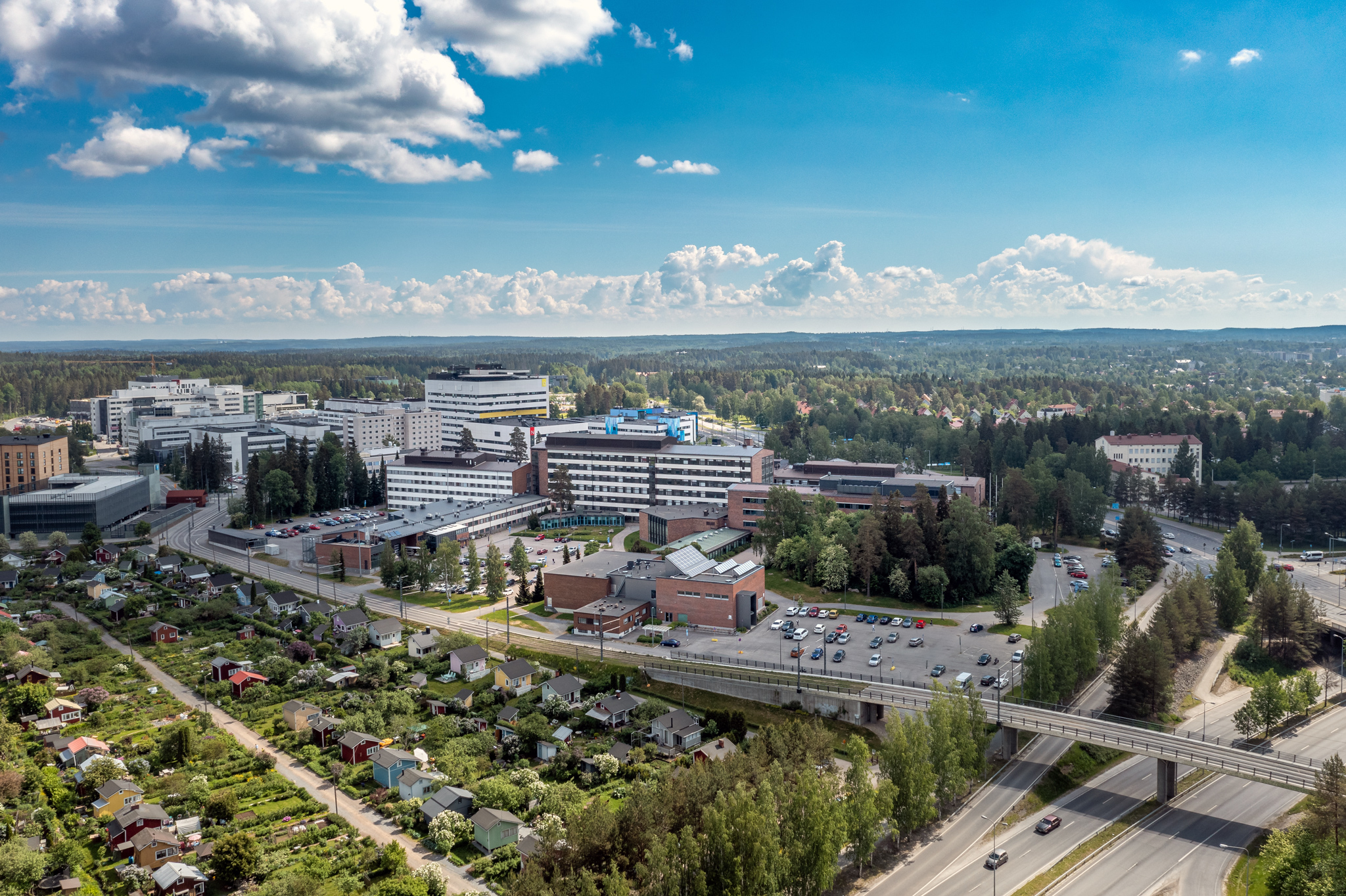
 Campus der Tampere University in Finnland | Foto: Tampere University
Higher education in Germany remains heavily oriented toward a full-time model. Yet there is a great need for flexible study options. A new thematic dossier from the DUZ Spotlight series uses Finland as an example to show how universities can create more flexible study paths through open enrolment, digital infrastructure, and cross-university collaboration—and which approaches can be applied in Germany.
Everyday student life is changing—but academic structures are changing only slowly
Full-time study remains the norm at German universities. 88 percent of bachelor’s programmes and 97 percent of master’s programmes are designed as full-time programmes. At the same time, students’ educational backgrounds are becoming more diverse. About 64 percent of students in traditional on-campus programmes work part-time; others have family obligations or enter university through vocational education pathways.
“Many students want to balance their studies with work and family responsibilities, yet the rigid full-time model still dominates at many universities,” says Sigrun Nickel. “The demand for study options that are flexible in terms of time and location is greater than ever before in Germany, but the programmes offered rarely reflect this,” says the Head of Higher Education Research at the CHE Centre for Higher Education.
However, increasing flexibility does not only mean more online teaching. “What matters most is the interplay between curricula, teaching and assessment formats, recognition rules, technical infrastructure, and counselling and support services,” says Nickel.
Finland Focuses on “Open Studies” and Inter-University Programmes
The two authors, Sigrun Nickel and Anna-Lena Thiele from the CHE, use Finland as an example to illustrate what such an approach might look like. There, flexibility is being promoted on several levels. So-called “Open Studies,” for example, make it possible to take individual courses or modules even without regular enrolment. In addition, there are inter-university study opportunities where students can attend courses at other universities and have the earned credit points applied toward their degree. A clear academic structure is essential here. Too much freedom of choice without sufficient guidance can lead to excessive complexity. Flexible study paths therefore require reliable curricula, transparent recognition rules, and effective advising services.
The “Tampere Universities” consortium is a paramount example of extensive cooperation. Tampere University and Tampere University of Applied Sciences have opened up more than 1,000 courses to each other. This allows students to take advantage of courses offered by both types of institutions. Since this past spring, the registration process and the transfer of academic credits have been further streamlined.
“The Finnish model cannot be applied directly to Germany, but it offers many adaptable starting points. There is still a great deal of untapped potential in this country, particularly when it comes to inter-institutional degree programmes. Collaborations can open up more options for students and facilitate transitions. At the same time, institutions can combine their different profiles and make better use of resources,” says Anna-Lena Thiele, Senior Project Manager at the CHE.
A Good Balance Between In-Person and Distance Learning
Furthermore, as part of its flexibility strategy, Finland is focusing on expanding digital course offerings, which are bundled and made accessible via the national platform Opin.fi. This topic is also gaining increasing prominence in Germany. Against this backdrop, three professors were asked to outline their visions for the future of the German higher education sector from their respective perspectives. The general consensus: A mandatory attendance requirement does nothing to address students’ need for flexibility. Rather, what matters is striking a good balance between in-person and online instruction. Both should offer clear added value for students.
About DUZ Spotlight
This special feature on the topic was published on October 8 as part of the 04/2026 issue of DUZ Wissenschaft und Management and was compiled by Sigrun Nickel and Anna-Lena Thiele. The dossier “Making Studies More Flexible” (available only in German) is the 17th edition of the “DUZ Spotlight – Good Practice International” series, developed jointly by CHE and DUZ, which is published periodically in DUZ and on www.che.de.